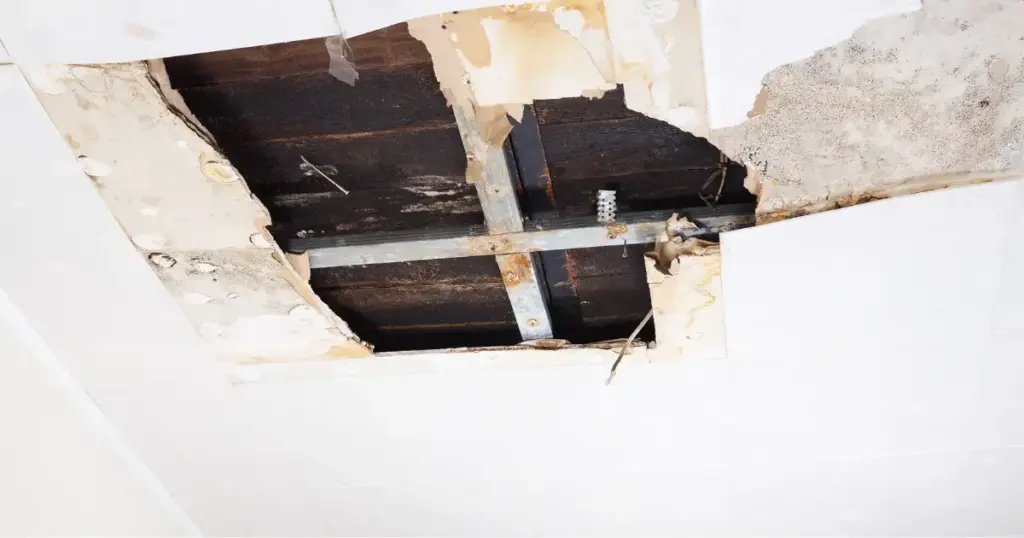
A roof collapse is rare, but a partial roof collapse or serious structural problem can develop after heavy storms, long-term leaks, or major wear. Knowing the warning signs can help you act early and keep people safe.
Why Roofs Become Structurally Weak
A roof is a system of decking, rafters or trusses, fasteners, and the roofing material above. Problems arise when that system is compromised, for example by:
- Long-term leaks that soak and rot wood
- Storm damage from wind, fallen trees, or debris
- Heavy water buildup on flat or low-slope roofs
- Damaged or corroded fasteners and connections
- Age and lack of maintenance
See our dictionary entries on partial roof collapse and structural compromise for definitions.
Warning Signs Outside
- A roofline that sags, dips, or looks uneven
- Visible bowing or bending in roof sections
- Large areas of missing, shifted, or damaged roofing material
- Standing water that does not drain, especially on flat roofs
- Fallen trees or heavy debris on the roof
Warning Signs Inside
- Ceilings that sag, bulge, or look wavy
- New or widening cracks in ceilings or walls
- Doors or windows that suddenly stick or no longer close properly
- Water stains that keep growing
- Visible daylight through the ceiling or attic
- Creaking, popping, or cracking sounds from the roof or ceiling
What to Do If You See These Signs
- Prioritize safety. If you see an active sag, hear loud cracking, or the ceiling looks ready to fall, leave the building immediately and call 911 if there is any immediate danger.
- Keep everyone out of the affected area. Do not go back inside to collect belongings until it has been checked.
- Stay off the roof. A damaged roof may not support weight.
- Document from a safe distance. Take photos and video of what you can see without entering the area.
- Call a professional for an emergency inspection and temporary protection. A temporary seal can help limit further water damage once it is safe to do so.
- Contact your insurance company promptly. Our guide on how to document roof damage for an insurance claim shows what to record.
A professional can assess whether the damage requires structural roof damage repair and what is safe to do next.
What Not to Do
- Do not ignore a sagging ceiling, even if it seems stable
- Do not poke or puncture a bulging ceiling near wiring or fixtures
- Do not climb onto a damaged roof to look for yourself
- Do not rely on a quick patch for structural damage
Small Fixes vs. Structural Repair
Simple patching is fine for minor surface problems. For example, our dictionary explains roof patching and what it can and cannot solve. When the structure itself is affected, a patch is not enough, and a proper assessment and repair are needed.
How to Reduce the Risk
- Fix leaks quickly, even small ones
- Schedule regular roof inspections, especially after storms
- Keep drains and gutters clear so water does not build up
- Have fallen branches and debris removed from the roof safely, through a professional
- Do not delay repairs on an aging roof
FAQ
Can a roof collapse without warning? Severe failures can happen quickly after a major event, but many structural problems show warning signs such as sagging, cracks, or noises beforehand.
Is a small ceiling stain a collapse risk? Usually not by itself, but it signals a leak that should be fixed before it damages the structure.
Worried About Your Roof’s Structure?
Do not wait. Call 954-549-4004 for an emergency inspection and fast same-day roofing repair in Miami.