Tile roofs are popular in South Florida for good reason: they look great and handle heat well. But even a strong tile roof can crack, slip, or lose tiles in a storm or with age. Here is what homeowners should know about tile roof damage and repair.
How a Tile Roof Actually Keeps Water Out
Many people think the tiles themselves are the waterproof layer. In most tile roofs, the tiles shed most of the water and protect what is underneath, while the underlayment beneath them does much of the waterproofing. This matters because the underlayment can wear out before the tiles do, even if the tiles look fine from the ground.
Common Causes of Tile Roof Damage
- Wind and storms: high winds can lift, shift, or break tiles
- Flying debris: branches and objects can crack tiles on impact
- Foot traffic: walking on tiles incorrectly can crack them
- Age and wear: underlayment, flashing, and fasteners deteriorate over time
- Failed mortar or adhesive: ridge and hip tiles can loosen
- Slipped tiles: movement caused by weak fastening or settling
Signs Your Tile Roof Needs Repair
- Cracked, chipped, or broken tiles
- Gaps or missing tiles you can see from the ground
- Slipped or uneven rows
- Loose or damaged ridge caps
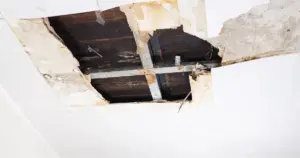
- Water stains on ceilings, even if the tiles look intact
- Debris, such as branches, resting on the roof
If you are checking after a storm, our guide on signs of hurricane roof damage explains what to look for from the ground.
How Tile Roof Repair Works
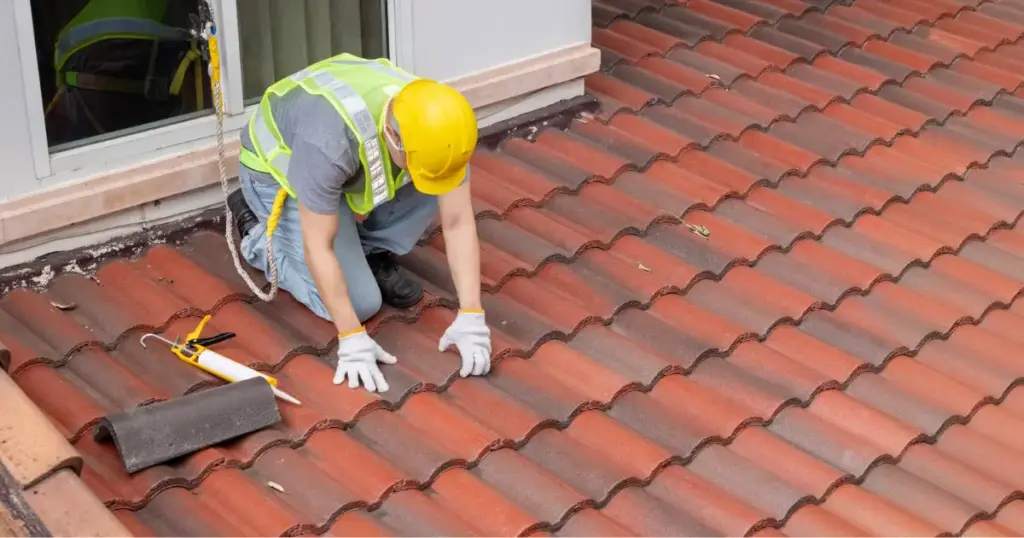
- Inspection: finding every damaged tile and checking the underlayment, flashing, and decking.
- Removal: careful removal of broken or slipped tiles.
- Underlayment and flashing repair: fixing the waterproofing layer beneath, which is often the real source of the leak.
- Replacement: installing matching tiles and securing them properly.
- Final check: making sure the area is sealed and water flows correctly.
Matching tiles can take time to source, especially for older or discontinued styles. In that case a temporary sealing protects the roof until the permanent repair is ready.
Why You Should Not Walk on a Tile Roof Yourself
Tiles can crack under body weight, and wet or sandy tiles are slippery. A small fall can cause serious injury, and stepping in the wrong place can turn a minor problem into a bigger repair. Inspect from the ground, use binoculars or your phone’s zoom, and leave roof access to professionals.
Repair or Replace?
A few damaged tiles are usually a repair. But if the underlayment is worn across the roof, leaks keep returning, or damage is widespread, a larger project may make more sense. See roof repair or replacement after a storm for the main factors.
FAQ
Can I replace a single broken tile myself? It is not recommended. Walking on the roof is risky and incorrect installation can cause leaks.
Will a cracked tile always leak? Not always, but it exposes the underlayment to sun and water, which can lead to leaks over time.
Need Tile Roof Repair in Miami?
Call 954-549-4004 for a roof inspection and fast repair of cracked, slipped, or missing tiles.