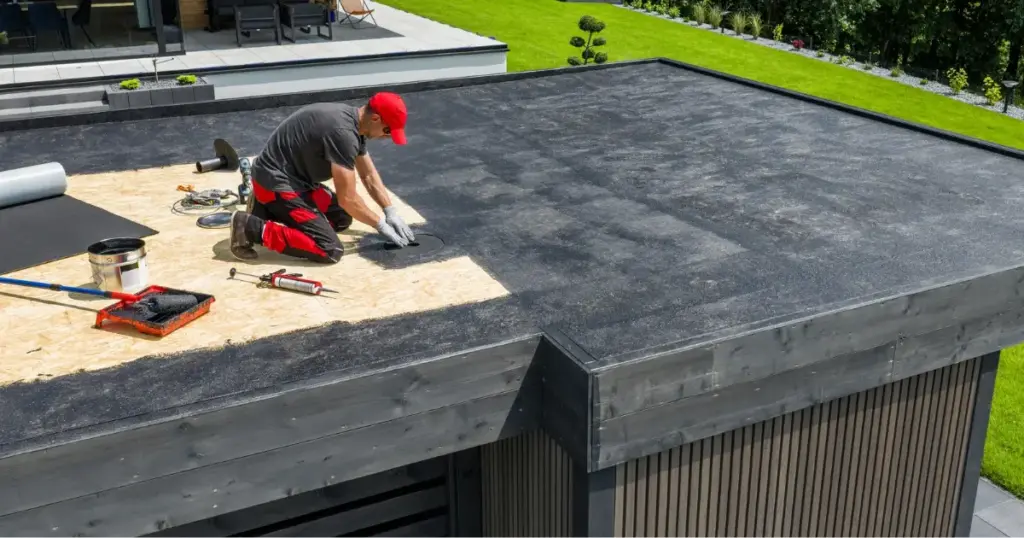
Flat and low-slope roofs are common across Miami, on homes, apartment buildings, and small businesses. They look simple, but they can be less forgiving than a pitched roof when something goes wrong. Here is why flat roofs leak, how to spot the signs early, and what to do when water starts coming in.
Why Flat Roofs Leak More Easily
A pitched roof sends water away quickly. A flat roof depends on a very slight slope, drains, and a continuous waterproof surface. If any of these fail, water sits on the roof and looks for a way in. Miami’s heavy rain, intense sun, and heat make this even harder on the roofing material.
Common Causes of Flat Roof Leaks
- Ponding water: puddles that stay on the roof long after the rain stops
- Clogged drains and scuppers: debris blocks the water’s exit
- Cracked, blistered, or torn membrane: sun, heat, and age wear down the surface
- Failed seams and flashing: weak points at edges, vents, and equipment curbs
- Worn sealant: dried-out or cracked sealant around penetrations
- Storm damage: wind, debris, and impact from tropical storms
Warning Signs to Watch For
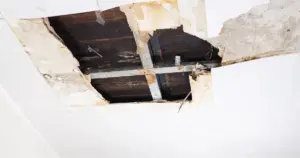
- Water stains on ceilings or walls, which may not be directly under the actual leak
- Standing water on the roof that does not drain within a couple of days
- Bubbles, blisters, cracks, or peeling seams in the surface
- A musty smell or visible mold inside
- Damp or compressed insulation
What to Do Right Away
- Stay off the roof. Wet flat roofs are slippery and may be weakened.
- Contain the water inside. Use buckets and move belongings. If water is near light fixtures or outlets, turn off the power to that area at the breaker.
- Take photos and videos of the damage inside and, from a safe position, outside.
- Call a professional for temporary roof sealing to stop more water from getting in.
- Report it to your insurer if the damage came from a storm. Our guide on how to document roof damage for an insurance claim shows what to record.
Temporary Fix vs. Permanent Repair
A temporary seal buys you time, but it does not solve the cause. A permanent repair may involve replacing damaged membrane sections, resealing seams and flashing, improving drainage, and fixing any wet insulation or decking. If you want to understand the difference, read emergency tarp vs. permanent repair.
How to Prevent Flat Roof Leaks
- Schedule a roof inspection at least once a year and after major storms
- Keep drains, scuppers, and gutters clear of leaves and debris
- Trim tree branches that can drop debris on the roof
- Repair small cracks and loose seams before they grow
- Limit foot traffic and avoid dragging equipment on the surface
When Repair Is Not Enough
If leaks keep coming back, the surface is widely cracked, or the insulation and decking underneath are soaked, a larger repair or replacement may be the better choice. We explain how to decide in roof repair or replacement after a storm.
FAQ
How can I tell if standing water is a problem? Occasional puddles after heavy rain can be normal, but water that stays for days points to a drainage or slope problem and should be inspected.
Can a flat roof leak be fixed the same day? Often the leak can be temporarily sealed the same day, with the permanent repair scheduled afterward depending on the damage and the weather.
Flat Roof Leaking Right Now?
Do not wait for the next storm. Call 954-549-4004 for same-day roofing repair in Miami, available 24/7.